
Restaurant food waste composting in Texas.
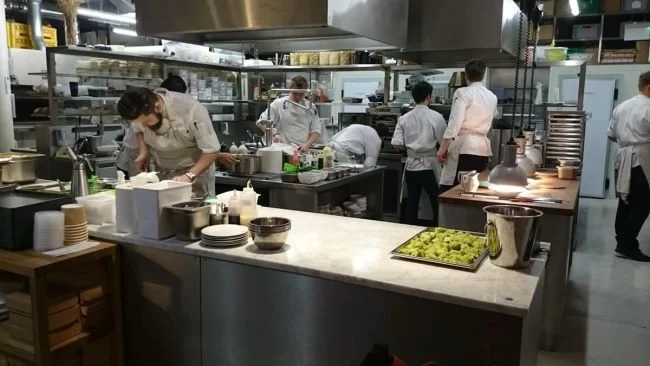
Restaurants generate more food waste than almost any other commercial operation.
Moonshot Compost makes it simple to redirect that waste from the landfill into a clean, measurable composting program — serving restaurants across Austin, Dallas–Fort Worth, Houston, and Waco.
Restaurants are one of the largest contributors to commercial food waste in the United States, generating an estimated 22 to 33 billion pounds annually. Most of it goes straight to the landfill, where it breaks down without oxygen and produces methane, a greenhouse gas significantly more potent than CO₂.
The scale of the problem is real, but so is the solution. Composting redirects that waste before it ever reaches the landfill, turning kitchen scraps and prep waste into compost that supports soil health and agricultural productivity.
For restaurant operators, it also means cleaner back-of-house operations, measurable diversion data for sustainability reporting, and a program that fits into daily kitchen workflows without adding complexity.
How Moonshot Compost addresses the challenges restaurants face.
High volume, generated fast
Restaurant kitchens produce food waste continuously, from morning prep through evening close. Without a structured diversion program, that volume ends up in the dumpster by default, creating odor, overflow, and pest issues in the process. Moonshot right-sizes the collection system to your operation — placing drums at the points where waste is generated and calibrating pickup frequency to your actual volume, so drums never overflow and the back of house stays clean.
Back-of-house complexity
The highest concentration of food waste in a restaurant comes from prep lines and production areas where the pace is fastest and the margin for disruption is smallest. Moonshot builds programs around back-of-house workflows, placing drums exactly where prep happens so diversion requires no extra steps, no central consolidation, and no interruption to the kitchen.
Staff training and turnover
Restaurant turnover is among the highest of any industry, which means a composting program that relies on a one-time training won't hold. Moonshot keeps the sorting rule simple — if it grows, it goes — and provides on-site training at launch, with retraining available any time it's needed. Clear, durable signage stays in place so the standard doesn't walk out the door every time a staff member does.
Space and landlord constraints
Many restaurants operate in shared retail centers where back-of-house space is tight and landlords regulate what goes in shared enclosures. Moonshot's sealed 55-gallon drums have a small footprint, contain odors, and fit into existing enclosures without requiring new permits or property approvals. They're also clean enough to place inside the kitchen when needed and are swapped for a freshly washed drum at every pickup.
Proving the impact
For restaurant brands with sustainability commitments, whether driven by ESG reporting, corporate mandates, or customer expectations, good intentions aren't enough. Moonshot provides weight-based diversion data for every pickup so your team has the documentation needed to report impact internally and communicate it externally.
Navigating local compliance requirements
Food waste regulations vary by city, and in some Texas markets — Austin in particular — composting access is already required for certain businesses. Moonshot operates across Texas markets and can help guide your locations toward compliance where regulations apply, without you having to track the rules city by city.
How Moonshot works in a restaurant environment.
1
Set aside your food waste
Place food waste in your Moonshot drum. Drums are positioned where prep happens, keeping the workflow simple for your kitchen team.
2
We collect and swap containers
3


We pick up on your scheduled days, weigh every drum on the spot, inspect for contamination, and replace each one with a clean, pre-washed drum.

We Report Your Impact
Every pound diverted is reflected in your Diversion Dashboard which is shareable and broken down by location for multi-unit operators.
Proudly serving up composting to these Texas eateries
By partnering with Moonshot, the restaurant brands below are offering their patrons a more sustainable dining experience. By clicking on any of their names you can harness the power of our Diversion Dashboard to explore the stats behind their food waste diversion activities.
How Moonshot helped a Texas fast-casual brand achieve zero contamination across five Austin locations.
A fast-casual sandwich brand with locations across Austin and DFW partnered with Moonshot to build a food waste diversion program that could keep pace with high-volume sandwich production without adding complexity to back-of-house workflows.
By placing drums at prep points and implementing a right-sized pickup cadence, the brand achieved something rare — a 100% contamination-free diversion stream across all five Austin locations, with every pound tracked and verified.
The result is a clean, scalable program that gives leadership the auditable data they need to prove their sustainability commitment extends through the entire lifecycle of their food.
or
Share how much waste you’re diverting.
Every pickup is weighed and recorded, so you always know exactly how much food waste your restaurant — or your entire portfolio — is keeping out of the landfill. Your Diversion Dashboard tracks total pounds diverted, monthly trends, and environmental impact equivalencies in real time. It's shareable via link with no login required, so your sustainability team, corporate leadership, or customers can see the impact whenever they need to.
Discover Advanced Reporting with Our Diversion Dashboard
The environmental aspect of composting may garner the most headlines, but there are also social and governance benefits to be gleaned, as well.
See how else composting can help your ESG efforts.
Making composting easy.

A clean, pre-washed drum at every collection.

On-site staff training at launch, with retraining available any time.

Simple sorting — if it grows, it goes.
What happens to your food waste?
All food waste collected by Moonshot is delivered exclusively to TCEQ-permitted industrial compost facilities — state-regulated operations overseen by the Texas Commission on Environmental Quality. There, it breaks down aerobically into compost that supports soil health and agricultural productivity across Texas.
Unlike landfill disposal, where food waste decomposes without oxygen and produces methane, composting converts that same material into a biological resource. Your kitchen scraps become something useful.

Restaurant composting FAQs.
Getting started.
-
Moonshot works with any restaurant operation that generates meaningful food waste — fast-casual and QSR chains, full-service and chef-driven concepts, coffee shops, dessert and specialty food brands, and multi-unit operators across Texas. If your kitchen generates food waste, we can build a program around it.
-
We collect from restaurants in Austin, Dallas, Fort Worth, Houston, and Waco. Our territory is always expanding, so check back often to see if we're in your area.
-
Once we've completed a site visit and finalized your proposal — which we typically turn around within 24 hours — most programs are up and running within a few weeks. We handle the setup, training, and equipment so your team can focus on the kitchen.
-
It usually is — and that's expected. We start with a reasonable estimate, then use real weight data from the first few weeks to dial in the right number of drums and pickup frequency. The program is designed to be flexible from day one.
Data, reporting, and compliance.
-
Yes. Your Diversion Dashboard is updated weekly and shareable via link with no login required. It shows total pounds diverted, monthly trends, and environmental impact equivalencies. For brands working toward ESG goals, B-Corp certification, or corporate sustainability mandates, the data is formatted to be used directly in reports and stakeholder communications.
-
Yes. Food waste regulations vary across Texas markets. Austin in particular has mandatory composting requirements for certain businesses. Moonshot can help guide your locations toward compliance where regulations apply.
Operations and logistics.
-
No. Drums are placed exactly where prep happens, so diversion is as simple as walking to the nearest container. There's no hauling waste across the kitchen, no complex sorting, and no disruption to your existing workflow.
-
If it grows, it goes. That covers all food waste — raw and cooked meat, dairy, produce, bread, coffee grounds, and floral waste. See the full list of compostables here.
-
At every scheduled pickup, your driver removes full drums and replaces them with clean, pre-washed ones. Cleaning happens off-site. Drums are washed with soap and water before they're returned to service. You never handle a dirty container.
-
Yes. Moonshot's drums have a small footprint, seal completely, and fit into existing enclosures without requiring new permits or landlord approvals. They're also clean enough to place inside the kitchen when space near the dock is limited.
-
Your driver inspects every drum at pickup. If contamination is found, they photograph it and send it to your account manager immediately. Your team gets notified so the issue can be addressed with the right department or shift before it becomes a recurring problem.
-
We conduct on-site training before launch and will return as many times as needed to cover different shifts or bring new staff up to speed. Laminated signage stays in place at every drum so the standard is always visible, regardless of who's working that shift.
-
Moonshot exclusively delivers all collected food waste to TCEQ-permitted industrial compost facilities. These are state-regulated operations overseen by the Texas Commission on Environmental Quality. This means your diversion program is backed by a verified, permitted endpoint — not informal or unregulated composting. Combined with container-level weighing and our Diversion Dashboard, this gives your team a complete chain of custody from store to compost facility for ESG reporting and corporate compliance documentation.
Multi-location and scaling.
-
Yes. Moonshot operates across Houston, Dallas–Fort Worth, Austin, and Waco, and provides location-level reporting for multi-unit operators. You get a consistent program and standardized data across your entire Texas portfolio.
-
Yes. Moonshot's established routes across all four Texas markets mean new locations can be onboarded without starting from scratch. The same system, the same reporting, and the same service standard applies regardless of how many locations you're running.
Start diverting your restaurant's food waste.
Get in touch to learn how Moonshot can build a composting program around your kitchen.
We'll walk your space, estimate your volume, and have a proposal back to you within 24 hours.


